
Best Mesh Wi-Fi Systems
As an Amazon Associate I earn from qualifying purchases. Some links may earn us a commission at no extra cost to you.
Mesh systems live or die on one thing: fast, stable Wi-Fi at distance (not just speed next to the main router). For most homes in 2026, I’d start with Wi-Fi 7 if you can, then prioritize multi-gig ports if you have (or plan) faster internet.
How I researched
I compared recent mesh roundups/deep dives/spec sheets, prioritized real-world ranged throughput, checked wired backhaul/multi-gig port options, noted current availability/EOL risk, and weighed performance vs. long-term ownership costs (app reliability, updates, and support).
Top picks
TP-Link Deco 7 Pro (Deco BE63) — Best for most homes (Wi-Fi 7 value)
A strong “buy once, upgrade the house” pick: Wi-Fi 7 tri-band + 6 GHz, lots of wired flexibility, and consistently great performance for the money.
Why it wins: multiple 2.5GbE ports per node make wired backhaul and fast wired devices easy.
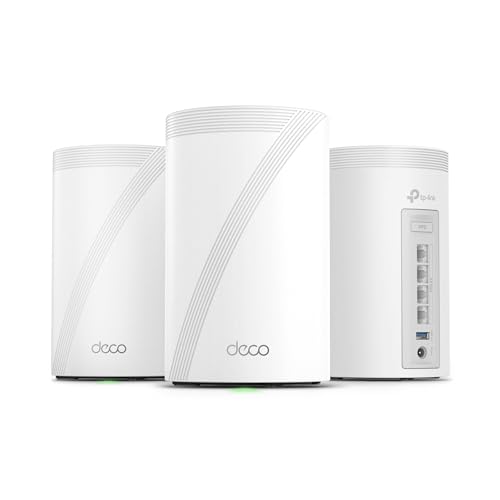
- 𝐅𝐞𝐚𝐭𝐮𝐫𝐞-𝐑𝐢𝐜𝐡 𝐖𝐢-𝐅𝐢 𝐁𝐮𝐢𝐥𝐭 𝐭𝐨 𝐋𝐚𝐬𝐭: Get expansive whole-home coverage, fast Wi-Fi 7 speeds, and a future-ready 10G WAN/LAN port that stays ahead as your network grows. Ideal for both everyday users and performance-focused homeowners.
- 𝗩𝗮𝘀𝘁 𝗠𝗲𝘀𝗵 𝗖𝗼𝘃𝗲𝗿𝗮𝗴𝗲 & 𝗗𝗲𝘃𝗶𝗰𝗲 𝗖𝗮𝗽𝗮𝗰𝗶𝘁𝘆: The 3-pack mesh system covers up to a vast 7,600 sq.ft. and supports over 200 devices without compromising performance, ensuring seamless connectivity.
- 𝐁𝐄𝟏𝟎𝟎𝟎𝟎 𝐓𝐫𝐢-𝐁𝐚𝐧𝐝 𝐖𝐢-𝐅𝐢 𝟕 𝐒𝐩𝐞𝐞𝐝𝐬: Delivers up to 5,188 Mbps (6 GHz), 4,324 Mbps (5 GHz), and 574 Mbps (2.4 GHz) speeds for 4K/8K streaming, AR/VR gaming, and more. Performance varies by conditions, distance to devices, & obstacles such as walls.

Pros
- Excellent speed at range for the price
- 6 GHz support helps reduce congestion (with compatible devices)
- Great wired backhaul flexibility thanks to multi-gig ports
Cons
- Wi-Fi 7 gains need Wi-Fi 7 clients
- App-first management may feel limiting for tweakers
Social proof: See reviews on Amazon.
Who should skip: If you’ll never use multi-gig or 6 GHz, a cheaper Wi-Fi 6 mesh can be enough.
Scores: Performance 4.5/5 • Ranged throughput 4.5/5 • Ease of use 4/5 • Value 4.5/5
eero Pro 7 — Best for easiest setup + “it just works”
If you want simple, consistent roaming and don’t want to babysit settings, eero is the low-friction choice.
Why it wins: very fast wired ports per node are great if your modem location needs one high-speed wired link.
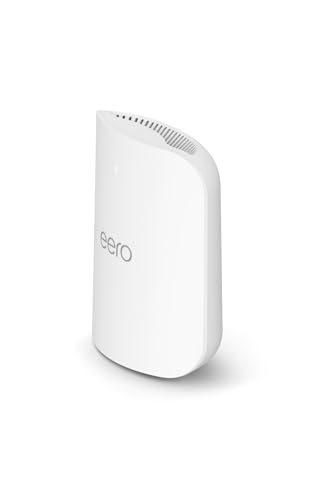
- WIFI AT THE SPEED OF LIFE - eero Pro 7 brings next-generation speed and reliability to home and business networks with high bandwidth needs.
- RELIABLE CONNECTIVITY - eero Pro 7 helps eliminate dead spots, so you stay connected across different floors and rooms throughout your home and small or medium-sized business.
- PRO-LEVEL SPEED - Support for internet plans up to 5 Gbps with two auto-sensing 5 GbE ports and wireless speeds up to 3.9 Gbps handle your network’s most demanding wifi needs.
Pros
- Very beginner-friendly app + smooth roaming
- Strong for busy networks with lots of devices
- Great if you want fast wired performance from each node
Cons
- Fewer advanced knobs than enthusiast brands
- Extra features may require subscriptions (depending on what you want)
Social proof: See reviews on Amazon.
Who should skip: If you need lots of Ethernet ports on each node, Deco BE63 is easier to wire up.
Scores: Performance 4/5 • Ranged throughput 4/5 • Ease of use 5/5 • Value 4/5
NETGEAR Orbi 770 Series (RBE773) — Best for larger homes (Wi-Fi 7 coverage focus)
Orbi is often strongest when you’re trying to push usable speeds across more rooms/floors.
Why it wins: a big-home mesh approach that tends to hold up well when you add nodes.

- WHOLE-HOME COVERAGE WITH NO DEAD ZONES: The router plus satellites create a seamless mesh system that blankets up to 8,000 sq ft in fast, reliable WiFi from the front door to the backyard and basement to rooftop, link up to 100 devices on one network
- EVERYONE ONLINE AT ONCE, NO SLOWDOWNS: Tri-Band technology with Enhanced Backhaul helps deliver faster WiFi across your home so WiFi stays fast on every device simultaneously
- NEXT-GEN WIFI 7 SPEEDS: Up to 11 Gbps, 2.4X faster than WiFi 6, for 8K streaming, gaming, VR & video calls. Your phones, laptops and TVs all connect, including WiFi 6 and WiFi 5. Real-world speeds vary depending on connected devices and internet plan
Pros
- Designed for whole-home coverage with Wi-Fi 7
- Solid option if you want to add wired backhaul later
- Mature management/support ecosystem
Cons
- Add-on services can increase ownership cost
- Overkill for small apartments
Social proof: See reviews on Amazon.
Who should skip: If you mainly care about price-to-performance, Deco BE63 is usually the smarter buy.
Scores: Performance 4/5 • Ranged throughput 4/5 • Ease of use 4/5 • Value 3.5/5
Google Nest Wifi Pro — Best for Google Home households (Wi-Fi 6E simplicity)
If you’re deep in Google Home and want clean, minimal management, this is the “set it up and move on” 6E pick.
Why it wins: simple app control and a straightforward experience for typical gigabit plans.
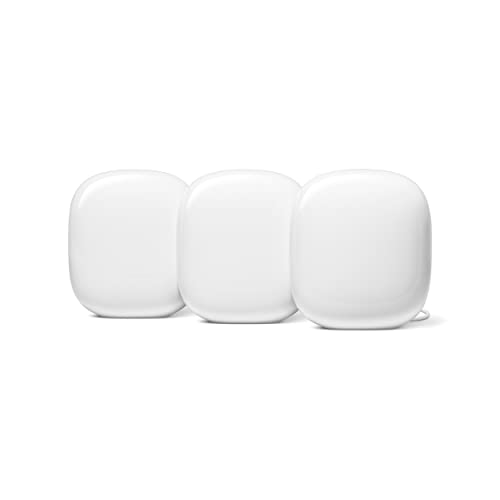
- Nest Wifi Pro is up to 2x faster than Wi-Fi 6, so you get super fast speeds and a reliable connection for your entire home[1]
- Three Wi-Fi routers provide up to 6600 square feet of fast, reliable Wi-Fi[2]; and you can customize your setup to create a mesh Wi-Fi system for the coverage you need
- Nest Wifi Pro uses the latest, most advanced Wi-Fi 6E technology[3], so it isn’t compatible with previous generations of Google Wifi or Nest Wifi
Pros
- Wi-Fi 6E tri-band with 6 GHz support
- Simple management in the Google Home app
- Good fit for average internet speeds
Cons
- 1GbE ports limit wired multi-gig setups
- Not compatible with older Google/Nest Wi-Fi generations
Social proof: See reviews on Amazon.
Who should skip: If you have (or want) 2Gbps+ internet or multi-gig wired devices, pick a Wi-Fi 7 mesh with multi-gig ports.
Scores: Performance 3.5/5 • Ranged throughput 3.5/5 • Ease of use 4.5/5 • Value 4/5
MSI Roamii BE Pro (2-pack) — Best Wi-Fi 7 budget play for smaller homes
A newer Wi-Fi 7 mesh option that can be fast when nodes are placed well. I’d use it for small/medium spaces or layouts where nodes can be closer together.
Why it wins: a potentially cost-effective way into Wi-Fi 7—if your layout cooperates.
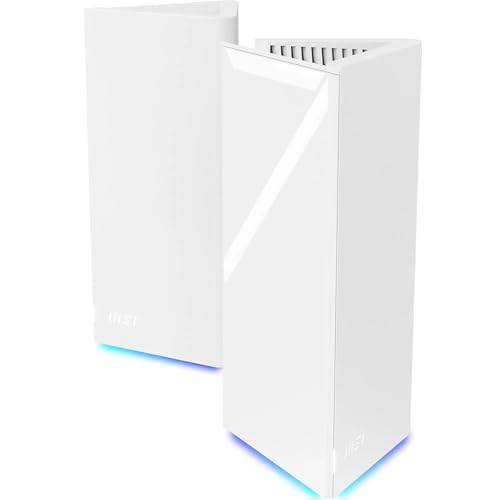
- WiFi 7 Tri-Band: Experience next-gen speed and stability with 6GHz, MLO, 4K-QAM, and 320MHz channels, delivering up to 11Gbps for smoother gaming, streaming, and multitasking.
- Whole-Home Coverage: High-performance antennas extend strong, consistent WiFi throughout your home — from living room to backyard — eliminating dead zones and weak signals.
- 2.5Gbps Ethernet Ports: Four 2.5Gbps ports provide flexible wired connections for NAS, PCs, or consoles, or can be used as high-speed backhaul for even better mesh performance.
Pros
- Strong short-range performance potential
- Good if you can place nodes closer together
- Helpful feature set for the category
Cons
- Long-range performance may drop off in tougher layouts
- Smaller ecosystem vs. the big three
Social proof: See reviews on Amazon.
Who should skip: Large homes with thick walls—go Deco BE63 or Orbi 770 instead.
Scores: Performance 3.5/5 • Ranged throughput 3/5 • Ease of use 4/5 • Value 4/5
Quick compare
- Best overall value + speed at range: TP-Link Deco BE63
- Easiest to live with: eero Pro 7
- Big-home coverage-minded: NETGEAR Orbi 770
- Google Home simplicity (6E): Nest Wifi Pro
- Wi-Fi 7 bargain hunter (small homes): MSI Roamii BE Pro
FAQs
Is Wi-Fi 7 worth it for mesh?
If you’re buying new in 2026 and keep routers for years, usually yes—especially for busy households and faster internet plans.
How many mesh nodes do I need?
Most homes do well with 2–3 nodes, but layout matters more than square footage (stairs, thick walls, long hallways).
Should I use wired backhaul?
If you can, yes. Ethernet (or MoCA) backhaul is the easiest way to stabilize speeds and reduce latency.
Will Nest Wifi Pro work with older Google Wifi / Nest Wifi?
No—Nest Wifi Pro isn’t compatible with earlier Google/Nest Wi-Fi generations.
As an Amazon Associate, I earn from qualifying purchases.