
Best Electric Guitar Brands and Models
As an Amazon Associate, I earn from qualifying purchases. Some links may earn us a commission at no extra cost to you.
If you want a “good” electric guitar (not just “cheap”), the difference is usually playability: neck comfort, tuning stability, and fretwork that doesn’t fight you. Below are five models I’d put on a short list for beginners and for sticking with long-term.
How I researched
I compared recent model lineups and long-running “safe pick” recommendations, prioritized playability out of the box (neck feel + tuning stability + common setup needs), and weighed long-term ownership factors like upgrade potential, parts availability, and consistency.
Primary metric for scoring: Playability out of the box (how quickly you can practice without fighting buzz, sharp fret edges, or unstable tuning).
Models
Yamaha Pacifica PAC112V — Best value “do-everything” guitar
If you want one guitar that can handle clean chords, crunchy rhythm, and beginner-to-intermediate lead playing, this is the classic “buy it once, don’t stress” pick.
Why it wins: it’s built to be forgiving—comfortable body, versatile pickup setup, and a reputation for consistent basic build quality in this price tier.

- Solid Alder Body
- Maple Bolt-On Neck
- Rosewood Fingerboard
Pros
- Versatile for many genres (clean to rock)
- Comfortable body shape for longer practice sessions
- Strong “keep it for years” upgrade potential
Cons
- Tremolo bridge can add tuning-learning curve
- May still benefit from a basic setup
Trade-offs / Who should skip (failure cases)
- If you want the simplest tuning stability, a hardtail model may suit you better.
- If you only want thick humbucker tones for heavy rock, you may prefer a dual-humbucker guitar.
Scores: Performance 4/5 • Playability (primary) 4/5 • Ease of Use 4/5 • Value 5/5
Squier Classic Vibe ’60s Stratocaster — Best “classic Strat” feel for the money
This is the “I want classic Strat comfort and sparkle” choice—great for learning chords, rhythm precision, and clean-to-crunch tones.
Why it wins: Classic Vibe models are often picked because they feel like a big step up from ultra-budget guitars, especially in neck feel and overall finish consistency.

- 100% designed by Fender
- Inspired by 1960s-era Stratocaster models
- Fender-Designed alnico single-coil pickups
Pros
- Comfortable neck feel for many beginners
- Classic Strat-style tones for clean and edge-of-breakup sounds
- Good platform for later upgrades (pickups, tuners)
Cons
- Single-coils can hum under some lighting/electronics
- Tremolo bridge may need learning to keep tuning stable
Trade-offs / Who should skip (failure cases)
- If you mainly play high-gain heavy music, a humbucker bridge may fit better.
- If you hate any background hum, consider a humbucker-equipped model.
Scores: Performance 4/5 • Playability (primary) 4/5 • Ease of Use 4/5 • Value 4/5
Epiphone Les Paul Standard 60s — Best for rock tone and sustain
If you want thicker rhythm crunch, smoother lead sustain, and that classic rock “weight,” a Les Paul Standard style is the move.
Why it wins: dual humbuckers are beginner-friendly for rock because they’re naturally fuller and often less noisy than single-coils.
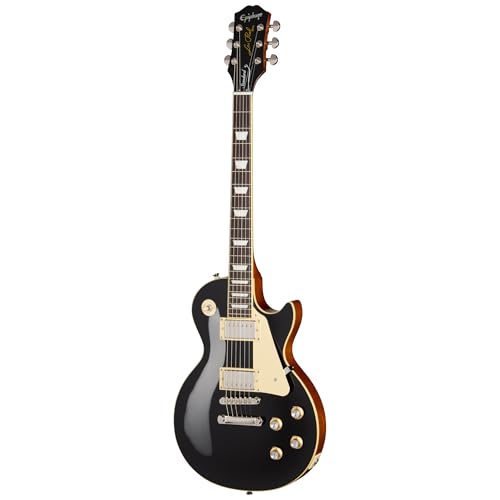
- Mahogany body and neck with a maple top
- Single ply cream binding on neck and body
- LockTone bridge and tailpiece with ProBucker pickups
Pros
- Thick, punchy rock tone (great for riffs and power chords)
- Humbuckers are typically quieter than single-coils
- Classic feel that works well for blues/rock/alt
Cons
- Can feel heavier than Strat-style guitars
- Upper-fret access can feel tighter than double-cut shapes
Trade-offs / Who should skip (failure cases)
- If shoulder weight bothers you, try an SG-style or Strat-style body instead.
- If you want super-snappy clean tones, a single-coil guitar may suit you more.
Scores: Performance 4/5 • Playability (primary) 4/5 • Ease of Use 3/5 • Value 4/5
Ibanez RG421 — Best for fast neck feel and modern rock/metal
If you want a slimmer, faster-feeling neck and a more modern vibe for rock/metal, this one is a staple.
Why it wins: it’s built around comfortable upper-fret access and a playing feel that helps when you start learning faster riffs and cleaner technique.
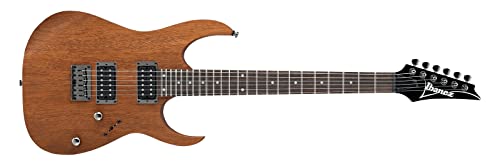
- Solidbody Electric Guitar with Meranti Body
- 2 Humbucking Pickups - Mahogany Oil
- Jatoba Fingerboard
Pros
- Fast-feeling neck for learning lead and speed drills
- Easy upper-fret access (great for solos)
- Dual humbuckers suit modern rock/metal tones
Cons
- Ultra-thin neck profile isn’t everyone’s favorite
- May still need a setup for your preferred string height
Trade-offs / Who should skip (failure cases)
- If you prefer chunky vintage necks, try a Strat/Tele-style neck instead.
- If you mostly play clean funk/pop, you may prefer single-coils.
Scores: Performance 4/5 • Playability (primary) 4/5 • Ease of Use 4/5 • Value 4/5
PRS SE Custom 24 — Best “one guitar for everything” upgrade-worthy pick
This is the “I want one guitar that can grow with me” choice: comfy body, versatile controls, and a layout that suits lots of genres.
Why it wins: it’s designed to cover clean, crunch, and lead work without feeling awkward—often a sweet spot for players who don’t want to commit to only Strat or only Les Paul vibes.
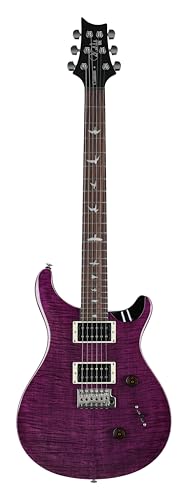
- Brings the original PRS to the more-accessible SE Series
- Features an addition of a quilted maple top veneer and matching quilted maple headstock veneer
- With a 24-fret, 25” scale length, Wide Thin maple neck, the SE Custom 24 Quilt is comfortable and addictive to play
Pros
- Versatile sound range (clean to higher gain)
- Comfortable body shape and good fret access
- Feels like a long-term keeper for many players
Cons
- Not the cheapest “first guitar” option
- Some versions vary by exact features/finishes
Trade-offs / Who should skip (failure cases)
- If you’re unsure you’ll stick with guitar, start with a cheaper “value” pick first.
- If you want strict vintage-correct Strat/Les Paul tone, this is more of a flexible hybrid vibe.
Scores: Performance 5/5 • Playability (primary) 4/5 • Ease of Use 4/5 • Value 4/5
Buying guide
Pick the “feel” that matches what you’ll actually play
- Strat-style (Classic Vibe, many Pacificas): comfy, bright, great for learning rhythm.
- Les Paul-style (Epiphone LP): thicker rock tone, often great for distortion.
- Modern double-cut (Ibanez RG, PRS SE): easy upper-fret access, modern versatility.
Don’t overthink pickups at the start
- If you love rock/metal: humbuckers make life easier.
- If you love clean tones and funk/pop: single-coils can be perfect (just expect some hum).
Budget for one “invisible upgrade”
Even a great guitar can arrive needing minor tweaks. A basic setup can make a bigger difference than chasing a different model.
FAQs
Which one is the easiest for a total beginner?
If you want the least drama and broad versatility: Yamaha Pacifica PAC112V.
Which one is best for rock and heavier music?
Epiphone Les Paul Standard 60s for classic rock thickness, or Ibanez RG421 for modern rock/metal feel.
If I can only buy one and keep it for years?
PRS SE Custom 24 is the “buy once, keep growing” style pick.
As an Amazon Associate, I earn from qualifying purchases.